

For millions of individuals with intellectual and developmental disabilities (IDD), independence isn’t defined by a single moment—it’s built through countless everyday actions. Remembering to take medication. Sending a message to a loved one. Preparing a meal safely. Assistive technology makes these moments possible, turning daily challenges into opportunities for growth, confidence, and dignity.
At OneWell Health Care, assistive technology (AT) is one of the most powerful tools we use to help the people we serve live safely and independently in their own homes and communities. In this guide, we’ll explore what assistive technology is, the different types of AT devices available, and how the right supports can transform daily life.
What Is Assistive Technology?
Assistive technology includes any tool, device, or system that helps a person complete daily activities more independently and with greater confidence. These supports range from simple, low-tech solutions — like a visual schedule or a pill organizer — to advanced, high-tech tools such as automated medication dispensers and speech-generating communication devices.
What matters most isn’t how sophisticated the technology is but how well it fits the individual. Assistive technology is never one-size-fits-all. Every solution is chosen based on a person’s unique goals, strengths, preferences, and environments so that it supports real-life routines in a meaningful way.
In fact, the right support doesn’t have to be complex to be powerful. An estimated 80% of assistive technology is low-tech—simple tools that often make the biggest difference—and most AT takes less than 10 minutes to learn. The reach is remarkable, too: research suggests that roughly 90% of individuals with IDD can benefit from some form of assistive technology. For nearly every barrier a person faces, there’s an AT tool that can help.

Types of Assistive Technology Devices
Assistive technology takes many forms, and the right combination depends entirely on the individual’s needs. Below are some of the most common categories of AT devices and supports.
Daily Living and Organization Aids
For many people, the biggest barrier to independence is simply keeping track of daily routines. Visual schedules, checklists, task prompts, and step-by-step reminders help individuals organize their day, complete activities on their own, and reduce reliance on constant supervision. These adaptive tools build routine and, over time, real confidence.
Communication and Sensory Devices
Communication is fundamental to self-expression and choice. Augmentative and alternative communication (AAC) devices, picture boards, and other visual supports give individuals who are non-verbal or have limited speech a reliable way to express needs, make decisions, and connect with the people around them. For many families, watching a loved one communicate for the first time is a life-changing milestone.
Everyday technology plays a bigger role here than many people realize. Tablets are the number-one all-in-one AT tool for communication, routines, and reminders, while smart speakers are among the most commonly used AT devices in the IDD community — putting hands-free reminders, calls for help, and daily support within easy reach.
Medication Management and Safety Tools
Staying healthy and safe at home is essential to independent living. Pill organizers, reminder alarms, and automated medication dispensers help individuals manage their medication accurately and on schedule. Safety-focused AT—including environmental alerts, cooking safety supports, and emergency awareness tools—adds another layer of protection while preserving a person’s autonomy. The impact can be significant: fire-safety AT can reduce cooking accidents by up to 80%, helping individuals stay independent in the kitchen with confidence.
The Benefits of Assistive Technology for Independent Living
The impact of assistive technology reaches far beyond convenience. When the right supports are in place, they change how a person experiences their own life.
Promoting Autonomy and Dignity
At its core, assistive technology is about choice. It allows individuals to do more for themselves — to participate fully at home, at work, and in their communities. This sense of ownership over daily life fosters independence and reinforces the dignity that every person deserves.
Supporting Families and Caregivers
Assistive technology doesn’t only benefit the individual — it strengthens the whole support system. By promoting safety and consistent routines, AT can reduce caregiver stress and give families peace of mind. It can also give staff back one to three hours per day by reducing repetitive tasks, freeing them to focus on meaningful, person-centered support. And because AT helps individuals complete tasks on their own, it increases privacy and dignity in some of the most personal moments of daily life. Importantly, technology is designed to enhance human support, never to replace it. It works alongside caregivers and direct support professionals, complementing the essential human connection at the heart of quality care.
Assistive Technology in Home and Community-Based Services
Assistive technology is a key part of home and community-based services (HCBS), and in many states it is available through Medicaid waiver funding. This means that for eligible individuals, AT services — including assessment, device selection, setup, and training — may be covered through authorized planning processes.
At OneWell, assistive technology is guided by a clear, person-centered philosophy. Every AT solution we recommend is built around individual goals, designed for real-world use, developed collaboratively with families and service coordinators, and always respectful of a person’s autonomy and choice. We also believe that technology is only as good as the support behind it, which is why we provide training and ongoing follow-up so no individual or family is ever left to figure things out alone.
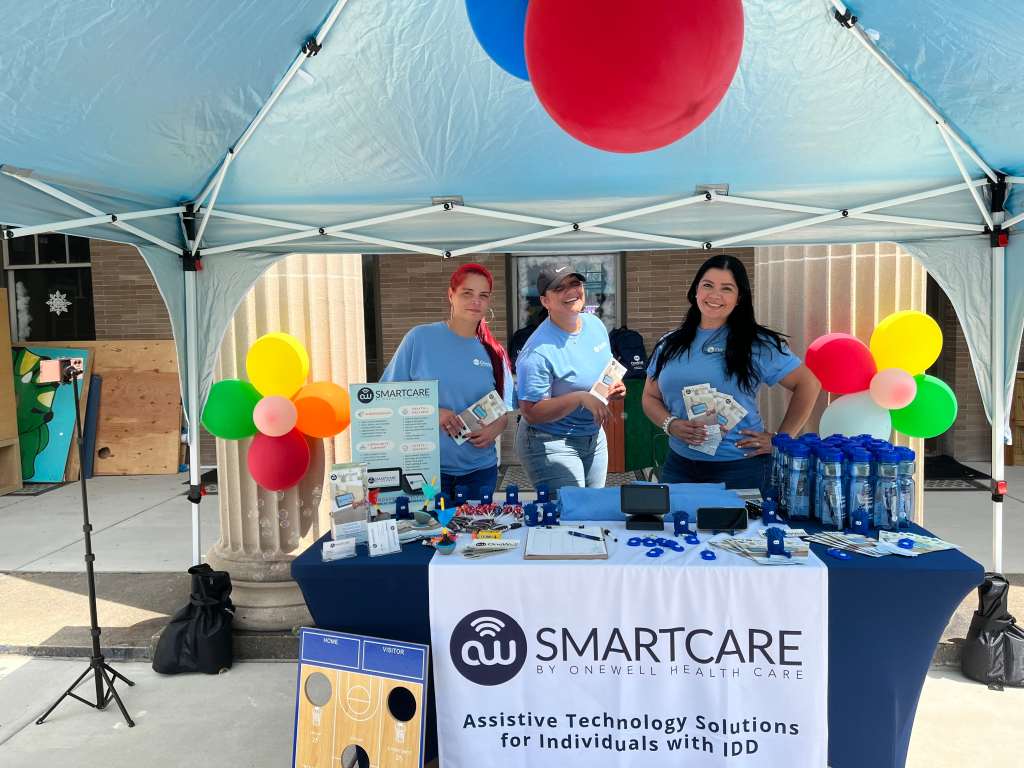
The OneWell Effect in of Assistive Technology
We asked Jenna Incorvaia, our Assistive Technology Manager, to share what this work really means for the people we serve.
“To me, assistive technology is about increasing independence, safety, choice, and quality of life through solutions built around the individual. It’s not one-size-fits-all, and it’s not limited to high-tech devices—the right answer might be a simple environmental adaptation or an advanced piece of technology. What matters is that we fit the technology to the person, never the other way around. One of the biggest misconceptions I hear is that AT only means expensive, complicated devices or that it’s only for people with significant physical or communication needs. The truth is that assistive technology can benefit people with an incredibly wide range of abilities and goals.
What I want families to understand is that handing someone a device is never the whole story. Real, lasting outcomes come from the process behind it — the assessment, the recommendations, the training, the collaboration, and the ongoing support as someone’s needs change over time. When you get that process right, you see it in the small, everyday moments: a person completing a routine on their own, communicating a choice for the first time, or simply feeling safer and more confident in their own home. That’s what makes this work so meaningful, and it’s why our team supports every individual and family through the entire journey.”
We also heard from Amanda Elicker, who receives assistive technology services through OneWell, about the difference it has made in her everyday life.
“My name is Amanda Elicker, and I have received three assistive technology devices through OneWell Assistive Technology that have made a positive difference in my daily life. My Alexa speaker helps me stay on track with daily reminders, my iPad allows me to stay connected with others and check on my pet while I’m away, and my Ring door camera gives me peace of mind by letting me see and speak with anyone at my door, whether I’m at home or out in the community. I am very happy with this service and truly appreciate all the support from the OneWell team. Thank you for helping me become more independent, connected, and safe.”
New at OneWell: Personal Emergency Response Systems (PERS)
We’re always expanding the ways we support our community—and we’re excited to share that OneWell now officially offers Personal Emergency Response Systems (PERS) as part of our assistive technology services.
A PERS device gives individuals a simple, powerful way to call for help and live with greater confidence at home. Here’s what it means for the people we serve:
- Instant access — help at the push of a button, 24/7.
- Fall detection—advanced sensors that recognize when help is needed, even if a person can’t call for it themselves.
- Complete confidence — the freedom to live daily life with the safety net everyone deserves.
As with all of our assistive technology services, our team handles everything from assessment to setup, so individuals and families are supported every step of the way. If you’d like to learn how to sign up for PERS, our care team is ready to help.

How OneWell Supports Access to Assistive Technology
Assistive technology has the power to open doors — to greater independence, safer routines, clearer communication, and fuller participation in community life. But the right technology only works when it’s paired with the right support.
At OneWell Health Care, we deliver assistive technology as part of a complete continuum of person-centered care across the states we serve. From the first conversation about a person’s goals through assessment, device setup, hands-on training, and long-term follow-up, our team walks alongside every individual and family at each step.
If you or a loved one could benefit from assistive technology, we’re here to help. Make a referral or contact our care team today, and we’ll help you explore the options—at no cost to you.
Frequently Asked Questions
Is assistive technology covered by Medicaid waivers? In many states, yes. Assistive technology services are typically provided through authorized planning and funding processes, such as state Medicaid waivers. OneWell’s team assists families through each of these steps.
Does assistive technology replace caregivers or staff? No. Assistive technology is designed to enhance independence, not to replace essential human support or supervision. It complements a person’s existing care team while helping them do more on their own.
How is the right assistive technology chosen? Selection is a collaborative, person-centered process. OneWell brings together the individual, their family, service coordinators, and AT specialists to identify tools that fit the person’s unique goals, routines, and environments.
Does OneWell offer Personal Emergency Response Systems (PERS)? Yes. OneWell now offers PERS as part of our assistive technology services. These devices provide 24/7 help at the push of a button and advanced fall detection, and our team supports the full process from assessment to setup.


This helped us understand what to expect in the first month. Thank you!
Clear and practical — shared this with our team.