

Wanting a change doesn’t mean wanting to leave nursing. If you’re exploring a private duty nursing career, it often just means looking for a setting where you can slow down, focus more deeply, and practice your profession in a different way.
If you’re used to rotating assignments, competing priorities, and the nonstop pace of facility-based care, private duty nursing can offer a real alternative — not because it’s easier, but because it’s different. It’s built around sustained attention, greater independence, and a close understanding of one person’s needs. It also works well for nurses who aren’t ready to leave their current job but want part-time, PRN, or supplemental hours.
Before you decide whether it’s the right direction for your career, here’s what the work is actually like — beyond the usual list of benefits.
(For a full breakdown of services, responsibilities, and who private duty nurses support, see OneWell’s guide, What Is Private Duty Nursing?.)

One-on-One Care, Not Less Skilled Care
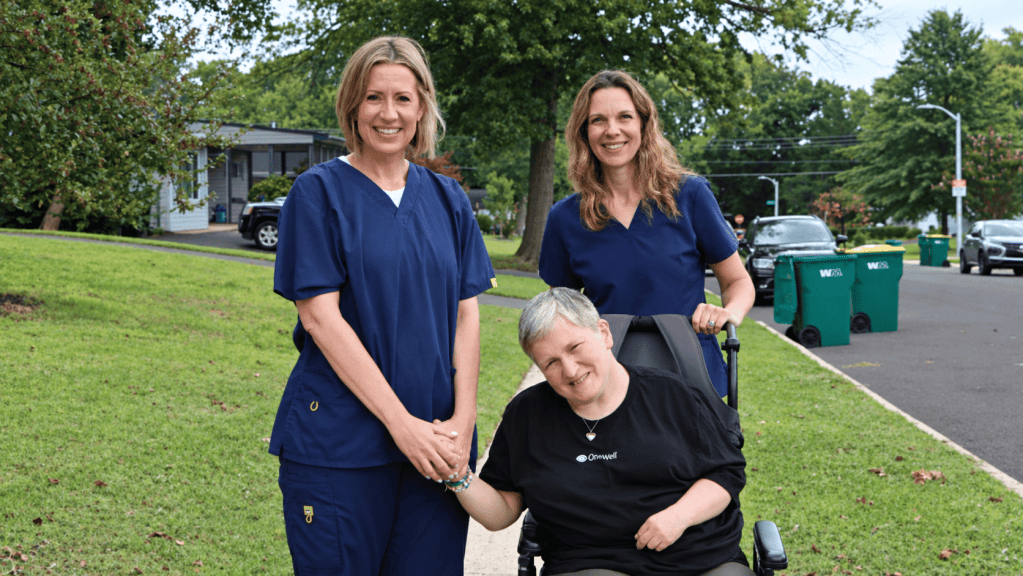
In a hospital, even the most attentive nurse is constantly triaging — alarms, admissions, documentation, medication schedules, and several patients’ shifting conditions, all at once. Private duty nursing changes that equation. Caring for one individual means learning their baseline, their routines, their communication style, and the subtle signs that something is changing.
That doesn’t mean the responsibility gets smaller. A private duty case may involve a tracheostomy, a ventilator, a feeding tube, or a seizure plan, often with sophisticated equipment in the home. It’s skilled care delivered with sustained, undivided attention — and over time, that closeness sharpens clinical observation in a way that brief, rotating encounters rarely allow. A new skill, a safer routine, a successful day at school: progress becomes visible in a way it isn’t when you only see a patient for one shift.
It also reshapes the relationship. You’re working in someone’s home, alongside their routines, family dynamics, and personal preferences — which means communication, patience, and professional boundaries matter as much as clinical knowledge.
Having a consistent nurse who truly knows and understands our individuals provides more than quality care, it provides comfort, trust, and peace of mind to our families. Knowing that a nurse is there to recognize their needs, advocate for them, and provide compassionate care allows our families to feel confident that their loved one is safe, supported, and receiving the care they deserve.
Kristin Burns, Director of Nursing, OneWell Health Care

A Schedule Built Around Your Life, Not Just the Unit’s
Private duty cases span daytime, evening, overnight, weekday, and weekend shifts, with full-time, part-time, and PRN options depending on case availability and location. That flexibility is worth considering if you want to:
- Keep your hospital job and add selected shifts
- Return to work with a more manageable schedule
- Continue your education
- Build a workweek around responsibilities outside nursing
Availability depends on each individual’s authorized care, so not every schedule exists in every location — a transparent recruiter should walk you through shift times, weekly hours, location, and clinical requirements before you commit to a case.
Is It Actually Easier Than Hospital Nursing?
Honestly — not universally. It trades some hospital pressures for a different set of responsibilities.
A quieter, one-on-one setting can feel restorative if you’re worn down by juggling several patients at once. Another nurse might miss the pace, variety, and immediate peer support of a hospital unit. Independence is a real factor, too: private duty nurses follow physician orders and a plan of care, but there isn’t always another clinician standing nearby when something changes. Knowing escalation procedures and your own scope cold isn’t optional — it’s the job.
The real question isn’t which type of nursing is better — it’s whether a private duty nursing career fits your strengths, your expectations, and this season of your life.
Is a Private Duty Nursing Career the Right Fit for You?
You may find private duty nursing rewarding if you:
- Prefer focusing closely on one individual over balancing several assignments
- Value continuity and building trust over time
- Notice and carefully document small clinical or behavioral changes
- Can work independently within a clear plan of care
- Communicate well with families, supervisors, and other providers
- Want a schedule that complements family life, school, or another nursing role
- Find purpose in helping people live more fully at home and in their community
If you thrive on constant activity and exposure to a wide range of conditions every shift, private duty nursing may take some adjustment — that’s not a flaw in you, it’s just useful self-knowledge before you take a case.
Private duty nursing offers a rare opportunity to practice truly individualized care while bringing greater balance back to a nursing career. Rather than rushing between rooms, nurses can focus deeply on one participant, build a meaningful relationship, and manage complex clinical needs in the place they feel safest—their home. With direct leadership support and clear workflows, nurses can deliver high-quality care and achieve meaningful clinical outcomes without losing their passion for the profession.
Colleen Brauen, Senior Manager of Nursing, OneWell Health Care

Before You Say Yes to a Case, Ask This
Every individual, home, schedule, and care plan is different, so a job title alone won’t tell you what a case is really like. Before accepting one, ask:
- What are the individual’s primary diagnoses and current clinical needs?
- What does a typical shift look like, and what are the exact hours?
- What case-specific orientation and training will I get, and will I demonstrate competency with equipment before working independently?
- Who do I contact if the individual’s condition changes or I have a clinical question?
Clear answers up front protect both you and the person you’ll be caring for — and help avoid a mismatch between what you expect and what the case actually requires.
What Private Duty Nursing Looks Like at OneWell
At OneWell Health Care, private duty nursing starts with understanding the person behind the plan of care. Our nurses support children and adults with complex medical and developmental needs where everyday life happens — at home, at school, and in the community.
Rather than treating someone as a list of diagnoses or tasks, our care team looks at their routines, goals, family relationships, and broader quality of life. Case-specific orientation and ongoing clinical guidance help you feel prepared before — and while — you’re in the field.
Ready to See If It’s a Fit?
Choosing a private duty nursing career isn’t stepping away from serious clinical work — it’s using the same knowledge somewhere that consistency, independence, and human connection carry even more weight.
Whether you’re considering a full transition or just want shifts that complement your current schedule, explore current RN and LPN opportunities with OneWell and find a role where your skills can support one individual, one family, and one meaningful day at a time. 💙
Build a Private Duty Nursing Career That Fits Your Life!
Ready to bring your skills and compassion into a setting built around one-on-one care? A private duty nursing career with OneWell Health Care means supporting individuals and families where it matters most — at home. Explore current RN and LPN opportunities and see how your next case could be your best one yet.


Comments
On the live site, comments are moderated before they appear.
Thanks! On the live site your comment would be submitted for review.